
How does Indeed pricing actually work?
Flat Fee Recruiter FAQs IndeedIt probably won’t surprise you that one of the most frequently asked questions to the Flat Fee Recruiter team is ‘how does Indeed pricing actually work?’
Chances are, if you’ve advertised on Indeed before, you’ve come away more confused than when you started.
And maybe even out of pocket!
The Sponsorship model.
Before Indeed, almost all job boards (like newspapers and magazines) charged ‘by the job.’ An easy to manage fixed cost that meant one less headache for employers.
When Indeed launched in 2007 it helped introduce ‘pay-per-click’ pricing to the world of recruitment. This is a sponsorship model that operates more like a digital advertising campaign. There are now further options, such as ‘pay-per-application’ (PPA) and ‘pay-per-started-application’ (PPSA), which we will look at in more detail below.
Sponsored job pricing vs free listings.
Indeed does still provide the opportunity to post ‘organic’ job ads that appear in search results without any spend, but these are much less common.
When you post a job to Indeed, you will be directed to a sponsorship page, and many jobs now must be sponsored before they can go live.
If you are able to post for free, you must bear in mind that your job will sit below sponsored roles and may receive fewer applicants, especially in the most competitive markets.
Sponsored jobs are promoted in search results and get significantly more visibility. You set a budget, and Indeed uses that to show your job to more candidates.
For jobs in highly competitive markets, you may have to spend significantly more to be confident of reaching a decent pool of qualified candidates.
How does Indeed Charge you?
This is one area where Indeed is constantly developing, and where some of the terminology can get a bit confusing.
Pay-Per-Click (PPC)
This one’s fairly simple. Someone clicks on your sponsored job advert and you pay for that click. They don’t necessarily have to apply.
Pay-Per-Application (PPA) and Pay-Per-Started-Application (PPSA)
Depending on the type of advert, Indeed can now also charge based on applications rather than clicks.
You might see this described as PPA (pay per application) or PPSA (pay per started application).
Despite the slightly different terminology, the basic idea is easy enough: rather than paying every time somebody clicks on your advert, you’re paying when they take the next step and start the application process.
Cost-Per-Application (CPA)
You may see this when looking at your campaigns and results.
Think of this one slightly differently. CPA is useful for understanding how much your applications are actually costing you.
So, for example, if you spent £200 advertising a vacancy and received 20 completed applications, your cost per application would be £10.
In simple terms:
-
-
-
-
CPC = how much you’re paying for clicks
-
PPA/PPSA = paying when somebody starts applying
-
CPA = how much each completed application has cost you on average
-
-
-
You really don’t need to become an expert in all the acronyms.
The important thing is to understand what Indeed is charging you for before you set your budget, because £100 spent paying for clicks can behave quite differently from £100 spent generating applications.
Don’t forget, the highly trained team at Flat Fee Recruiter can also manage your bespoke online budgets to ensure costs never get out of control. To talk to a member of the team, click here.
How is pricing worked out on Indeed?
This is something of a closely guarded secret, but PPC, PPA and PPSA pricing on Indeed will be based on some combination of:
-
-
-
Competition for similar roles
-
Location
-
Industry demand
-
Job title and keywords
-
-
So, if you’re trying to recruit for a hard-to-fill role in a very competitive area, you’re likely to need a bigger budget than you would for an easier-to-fill vacancy with less competition.
And remember: spending money gets your advert seen, it doesn’t guarantee applications.
If your job advert is weak, unclear or unattractive in some way, you can end up spending your budget and getting very few suitable applicants.
Why spending £20 per day doesn’t always mean £20 per day.
This is one of the biggest sources of frustration for users of the job board. Indeed doesn’t always spend your budget evenly every single day. Instead it works towards an average cost over a period of days or weeks.
This means your adverts may cost more on high-traffic days and less on quieter days
Over a period of time, you should see the cost balancing out around the average daily budget, but it’s very easy to see your costs spiralling, especially if you’re advertising a highly sought after role.
Indeed currently states that, for jobs that run continuously, your maximum weekly spend can be up to 7.5 times your daily budget.
So, if you set a daily budget of £20, you could potentially spend up to £150 in a week.
That doesn’t mean Indeed will spend £150 every week. But it does mean that the £20 you’ve entered isn’t necessarily a £20-a-day spending cap.
It’s definitely something to keep an eye on if you don’t want to get caught out.
Can you put a cap on your Indeed spend?
You can have more control over your overall spend if your jobs are set up within an Indeed campaign.
If you have multiple vacancies, a campaign is essentially just a way of grouping and managing your sponsored jobs and giving them an overall budget.
Once that campaign budget has been spent, the sponsored advertising stops.
This gives you more control over how much you spend, but there is a downside. If your budget is used up quickly, your job may stop being sponsored earlier than you wanted it to.
It’s a subject we’re watching closely.
We speak to our Indeed account manager every week and have been told that Indeed has received a lot of feedback from employers about controlling spend and is working on further budget controls.
For now, the important thing is to understand what type of budget you have set and whether it is actually capped, rather than assuming the number on the screen is the most Indeed can spend.
Why employers sometimes burn budget quickly.
A common mistake is assuming that spending more will automatically bring better candidates. it won’t.
You’re paying to get eyes on your advert. If candidates don’t like what they see, they’ll click on another result, but could still cost you money.
Huge turn-offs for applicants include:
-
-
-
Vague job titles
-
Missing salary information
-
Weak or generic descriptions
-
No clear benefits or selling points
-
-
A well written job advert can be the difference between a cost-efficient ad campaign and an expensive waste of time.
Do other job boards use this model?
Indeed’s sponsorship model is not always straightforward but it is becoming the norm across most job boards.
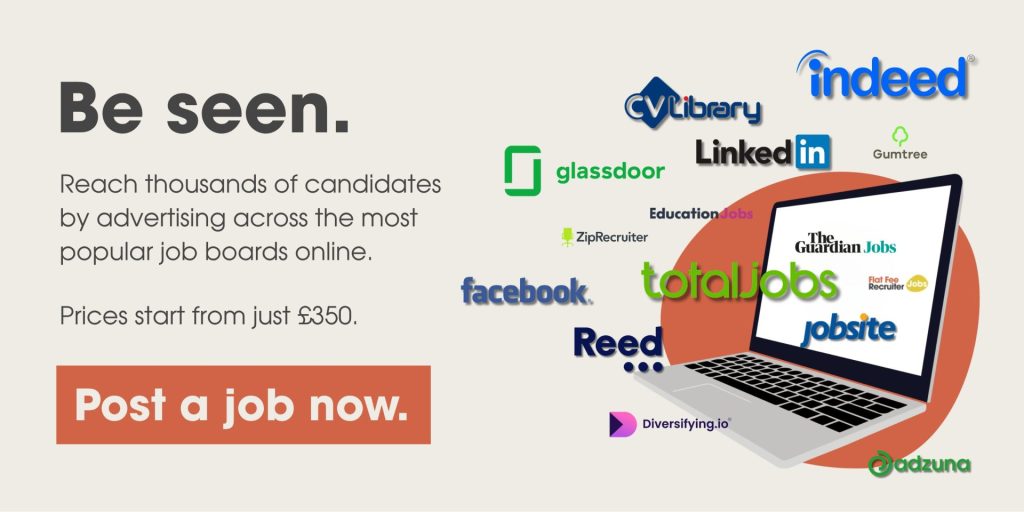
However, Flat Fee Recruiter continues to provide job board advertising across multiple sites, including Indeed, at a fixed price.
The highly trained team can also manage your bespoke online budgets to ensure costs never get out of control.
To learn how Flat Fee Recruiter can manage your Indeed campaigns on behalf of your business, from budgeting to shortlisting, book a meeting today.

Want maximum reach?

See your job live on the best job boards, the same day.
From £
350

Download the product book.
Complete end-to-end recruitment solutions to suit your budget, vacancy and time constraints.